Process and roles
Five intake channels, one handling path, five roles, asset link and four interfaces
Home / Training / Vulnerability management
New · ISO/IEC 27001 Annex A · BSI OPS.1.1.3 and DER.1 · Section 30 BSIG · CVSS · EPSS · KEV
The highest score is rarely the most urgent finding. From the operator’s perspective, the course shows how to verify vulnerabilities, prioritise them by risk, treat them effectively and close them after checking – so that technical findings become a justified order of work and a robust closure. For IT operations, security officers, system and application owners, CISOs and technical service providers; basic knowledge of IT systems, updates and technical vulnerabilities is assumed.
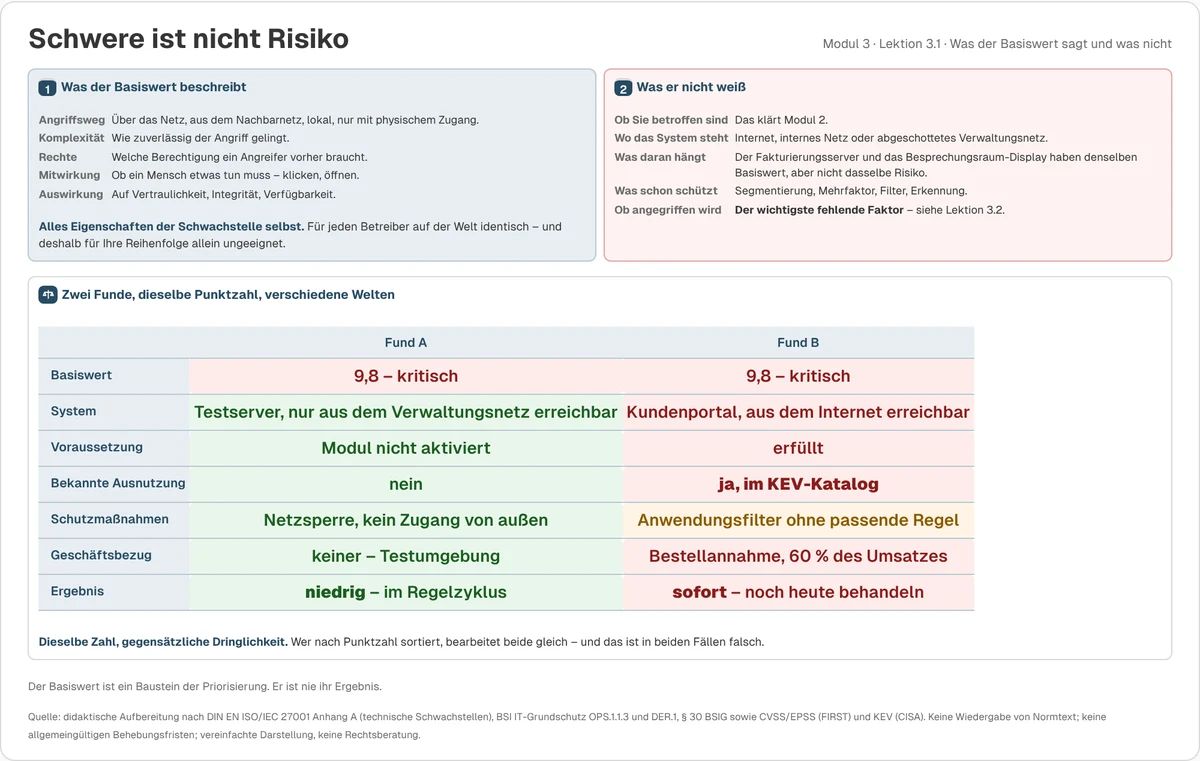
Scanners and vendors deliver more findings than any organisation can process. Sorting by score ties up capacity with critical findings on isolated secondary systems while medium findings on reachable core systems wait. Prioritising without verification means sorting false positives. Exceptions without an expiry date become permanent, and closing without a check produces a list of reported fixes – not of fixed vulnerabilities.
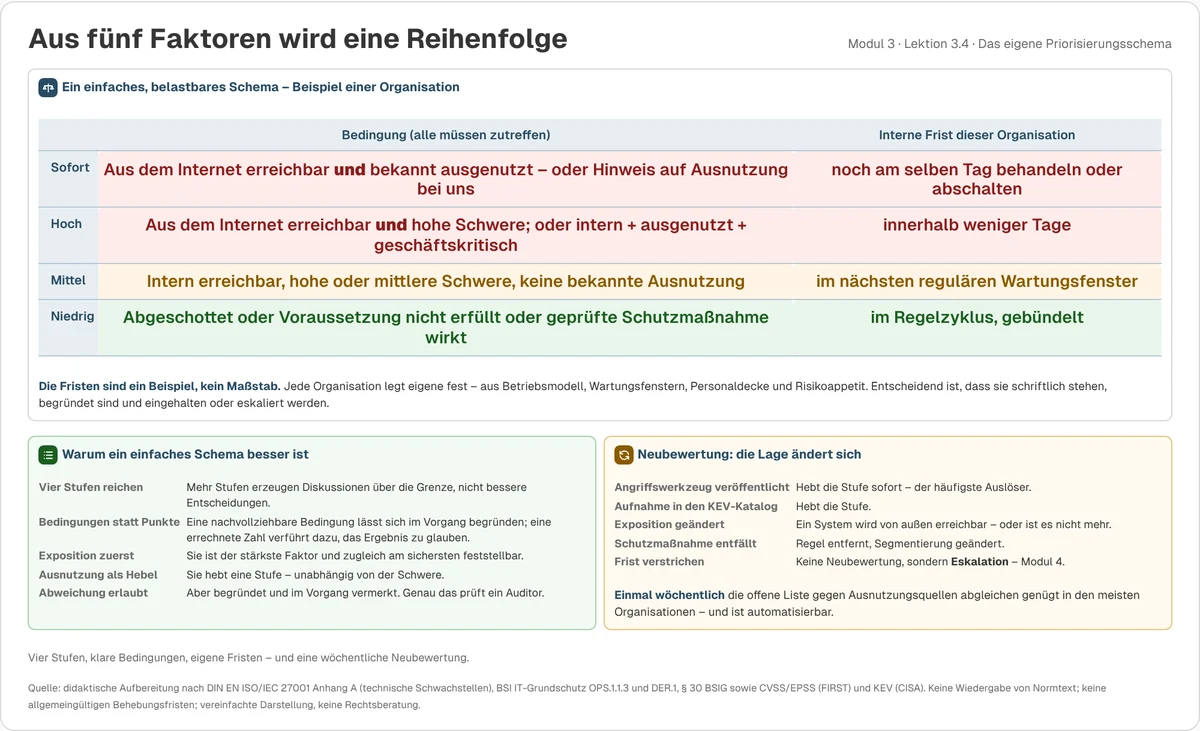
The course counters this with five intake channels with named recipients, three verification checks before every assessment, a four-level scheme based on exposure, known exploitation, severity, existing safeguards and business relevance, six mandatory details for every exception, automatic deadline escalation and a verification check that tests the attack path, not just the system. It deliberately does not give universal remediation deadlines: it shows how your organisation sets its own deadlines with a justification.
Five intake channels, one handling path, five roles, asset link and four interfaces
Component, version and precondition; backports, false positives, duplicates, intake form
Severity is not risk; known exploitation, exposure, safeguards – and your own scheme
Five treatment options, time-limited exceptions with six mandatory details, escalation matrix
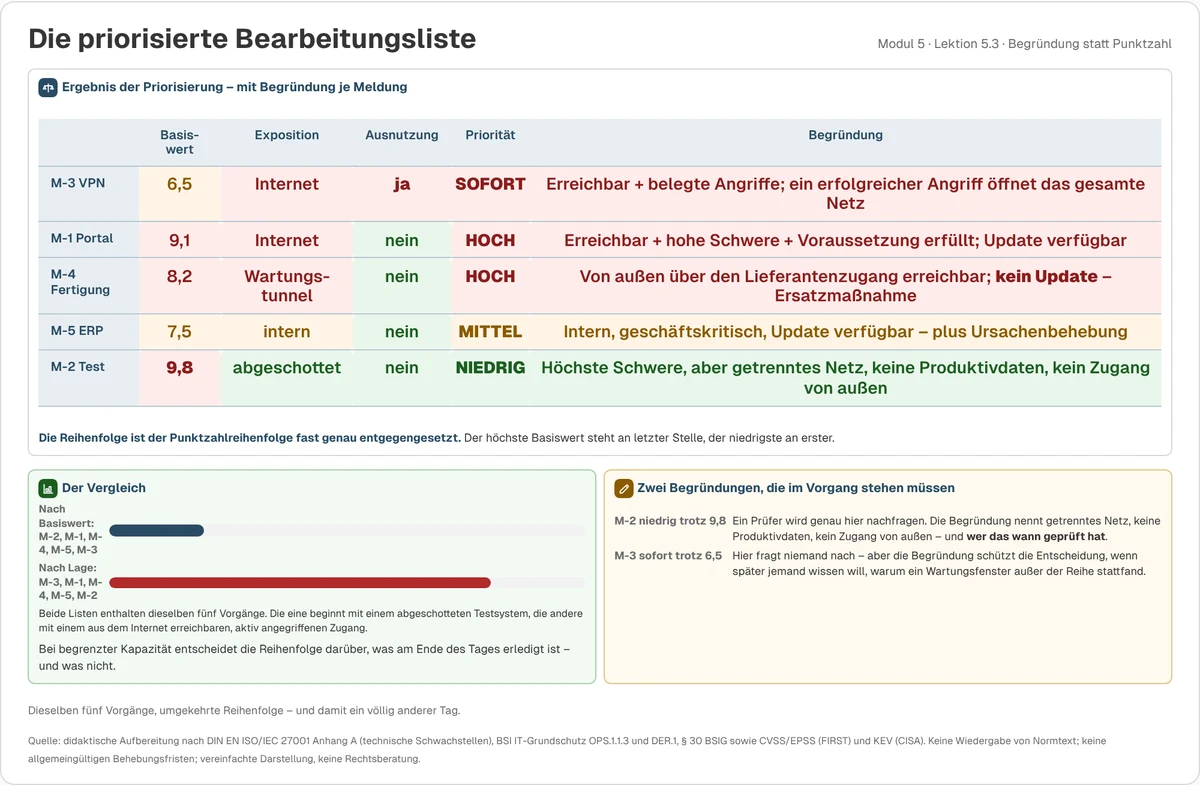
Five reports in one day – with a reversed order and a recurring finding
Closure evidence, five metrics with a clear reference base, transfer
Vulnerabilities in practice: in Vercora you keep a vulnerability register with KEV, EPSS and CycloneDX VEX and check SBOMs against OSV. The manufacturer’s perspective – vulnerability handling in the product, SBOM and reporting obligations – is covered in CRA: SBOM and manufacturer obligations; if the finding turns into an incident, this is handled by Incident Response and Playbooks.
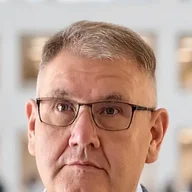
Auditor’s view
“Technical severity ratings do not determine the order of work. They describe the vulnerability – not your situation.”
Heinrich Markus Schulte · IT auditor and expert witness
Brochure as PDF (4 pages, 910 KB)
How to book: Individually without a subscription: €399 net per person, 12 months’ access. As an add-on to the subscription at the same price per person. Complements the courses on incident response, SIEM use cases and the CRA.
Live Add live: Consultation hour 60 min. for your questions, €290 · Workshop 3 hrs, e.g. defining the prioritisation scheme, deadlines and escalation rules for your organisation, €890
Request a live sessionCompany-wide licence, white label and operation on your own web space on request; test access and demo on request. Basis: DIN EN ISO/IEC 27001 (Annex A, management of technical vulnerabilities), BSI IT-Grundschutz modules OPS.1.1.3 and DER.1, Section 30 BSIG (NIS2) and the open scoring sources CVSS and EPSS (FIRST) and CISA’s KEV catalogue; standard texts are not reproduced. The valid original documents and your organisation’s requirements, deadlines and escalation rules are authoritative; universal remediation deadlines are deliberately not taught. Legal status November 2026. The certificate confirms attendance; it is not a certification or audit opinion. No legal advice. “BSI” is a mark of the BSI.
Related
Single seat, annual subscription or training package
Together we put together a training package that fits your responsibilities and your qualification needs. All courses run on the Vercora training portal, with knowledge checks and a certificate of attendance that can be verified online.