MODULE A
AI compliance under the EU AI Act
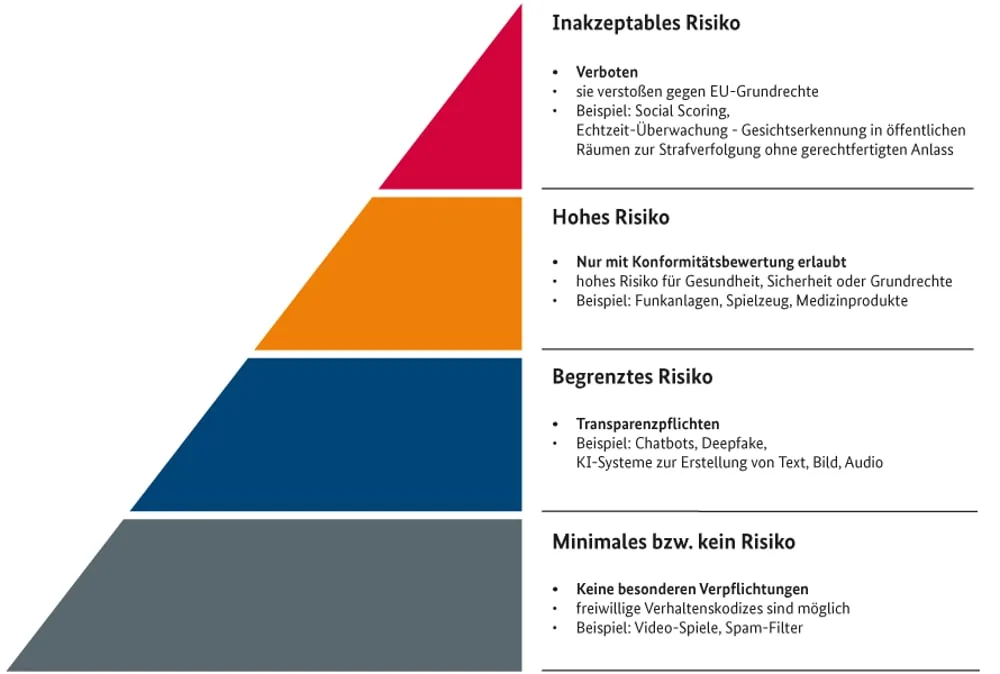
Risk classification, compliance roadmap, technical and legal documentation, preparation for conformity assessments, training.
Home / AI consulting
UNDERSTAND AI · SPOT OPPORTUNITIES · SHAPE THE FUTURE
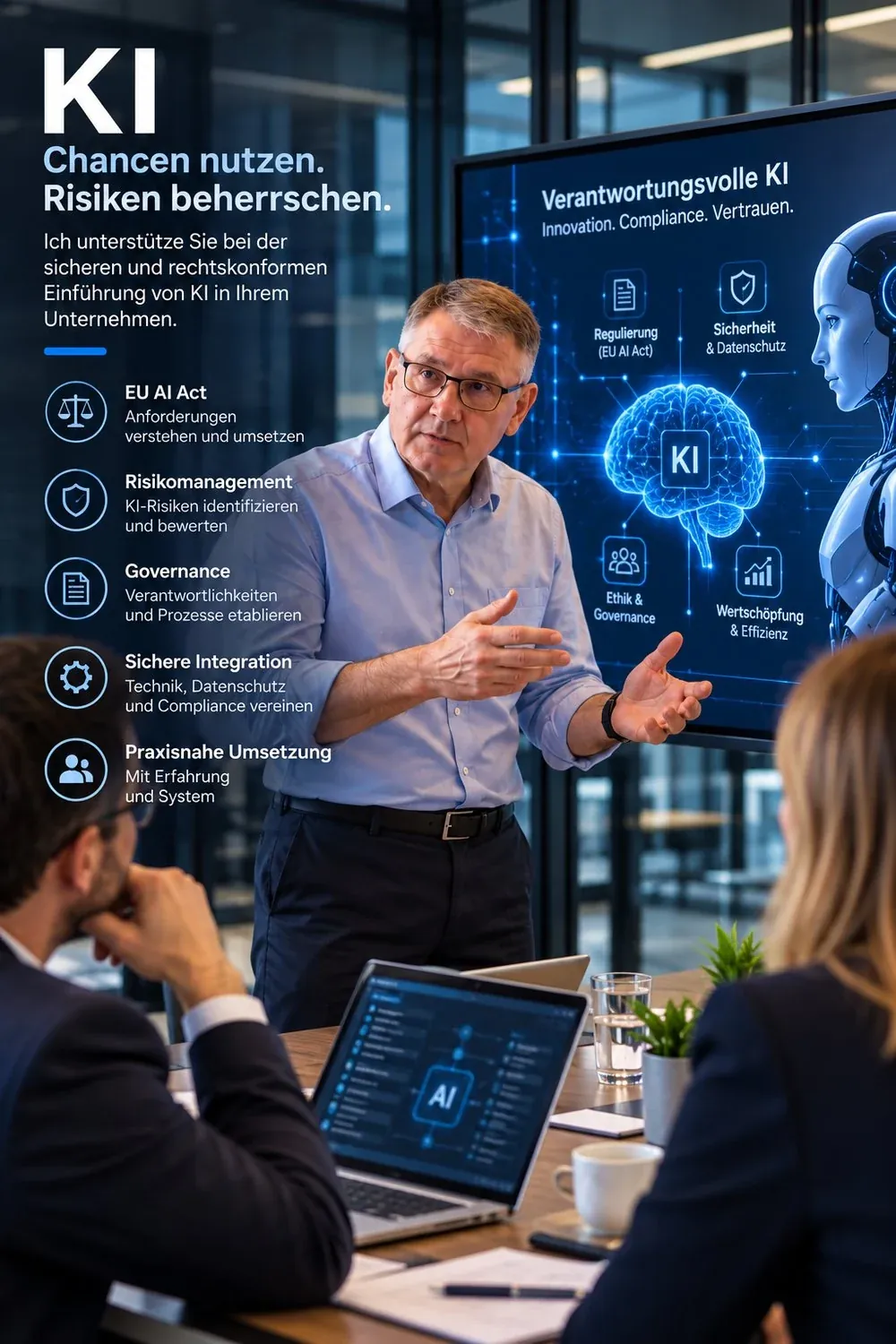
From status analysis to use cases, technical integration and legal safeguarding under the EU AI Act and Cyber Resilience Act, with an independent auditor’s eye.
APPROACH
01
Lay the foundations
Status check and maturity with a view to the AI Regulation.
02
Find use cases
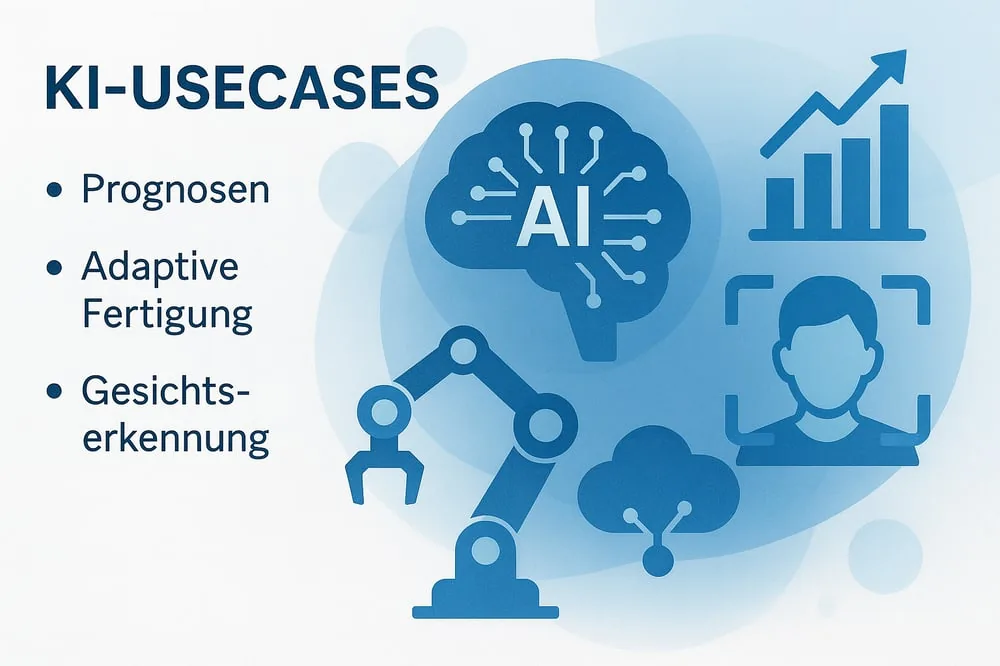
Process workshops, quick wins and strategic projects.
03
Implement & integrate
Low-code tools, ChatGPT via Azure, custom algorithms.
04
Make data usable
Data quick checks and intelligent data pipelines.
05
Introduce it on a sound legal basis
Governance, policies, training, AI officer as a service.
EU AI ACT & CYBER RESILIENCE ACT
MODULE A
Risk classification, compliance roadmap, technical and legal documentation, preparation for conformity assessments, training.
MODULE B
Security requirements, vulnerability and patch management, CE marking, technical documentation, supply chain review.
MODULE C
Common governance and documentation for products under several frameworks, such as AI software with IoT components.
FURTHER TOPICS
GDPR alignment, secure processing, anonymisation and pseudonymisation.
Round-the-clock support, shorter response times, handover of complex cases to humans.
Ethics and compliance guidelines for transparent, fair and future-proof use.
FREQUENTLY ASKED QUESTIONS
Yes. Anyone who uses AI systems professionally is a deployer under the AI Act. Since 2 February 2025, at least the obligation to ensure AI literacy among employees applies (Art. 4). Depending on the use, transparency obligations or obligations for high-risk systems are added.
Prohibitions and AI literacy since 2 February 2025, obligations for general-purpose AI models since 2 August 2025, transparency obligations since 2 August 2026. High-risk AI under Annex III follows from 2 December 2027, under Annex I from 2 August 2028.
For example, if it is used in HR processes such as candidate selection, in credit scoring, in critical infrastructure or in education, or if it is a safety component of a regulated product. The free AI Act self-check provides an initial classification.
With an AI register and a classification of your applications. This is followed by a policy, training and, where necessary, documentation for high-risk systems. In a free initial consultation we clarify what has priority for you.
Through a GDPR review before deployment, secure processing, anonymisation or pseudonymisation and clear rules on which data may go into which tools. This belongs in every AI policy.
FREE
Find out in a few minutes which risk class your AI systems fall into and which obligations follow.